Language:



A wire rope may look perfectly serviceable on the day it is delivered and still be unsafe within a single year of operation. Steel wire rope does not announce failure the way a hydraulic hose does. It abrades, corrodes, and fatigues quietly, one broken wire at a time, until the day the remaining wires in a section can no longer carry the load.
That is why wire rope inspection and retirement criteria are not paperwork to be filed away — they are the single most effective control a lifting operation has. A disciplined inspection programme detects deterioration long before it becomes an incident, converts unplanned downtime into scheduled replacement, and protects the people working under and around suspended loads.
At Aulone, we manufacture a wide range of steel wire rope for cranes, hoists, mining equipment, port machinery, elevators, and offshore applications, in constructions from 6×19 IWRC through 35WXK7 and spiral strand cables. Because we see ropes arrive back from customers for failure analysis, we have a clear view of what actually goes wrong in the field. This guide distils that experience into a practical framework you can apply to your own equipment.
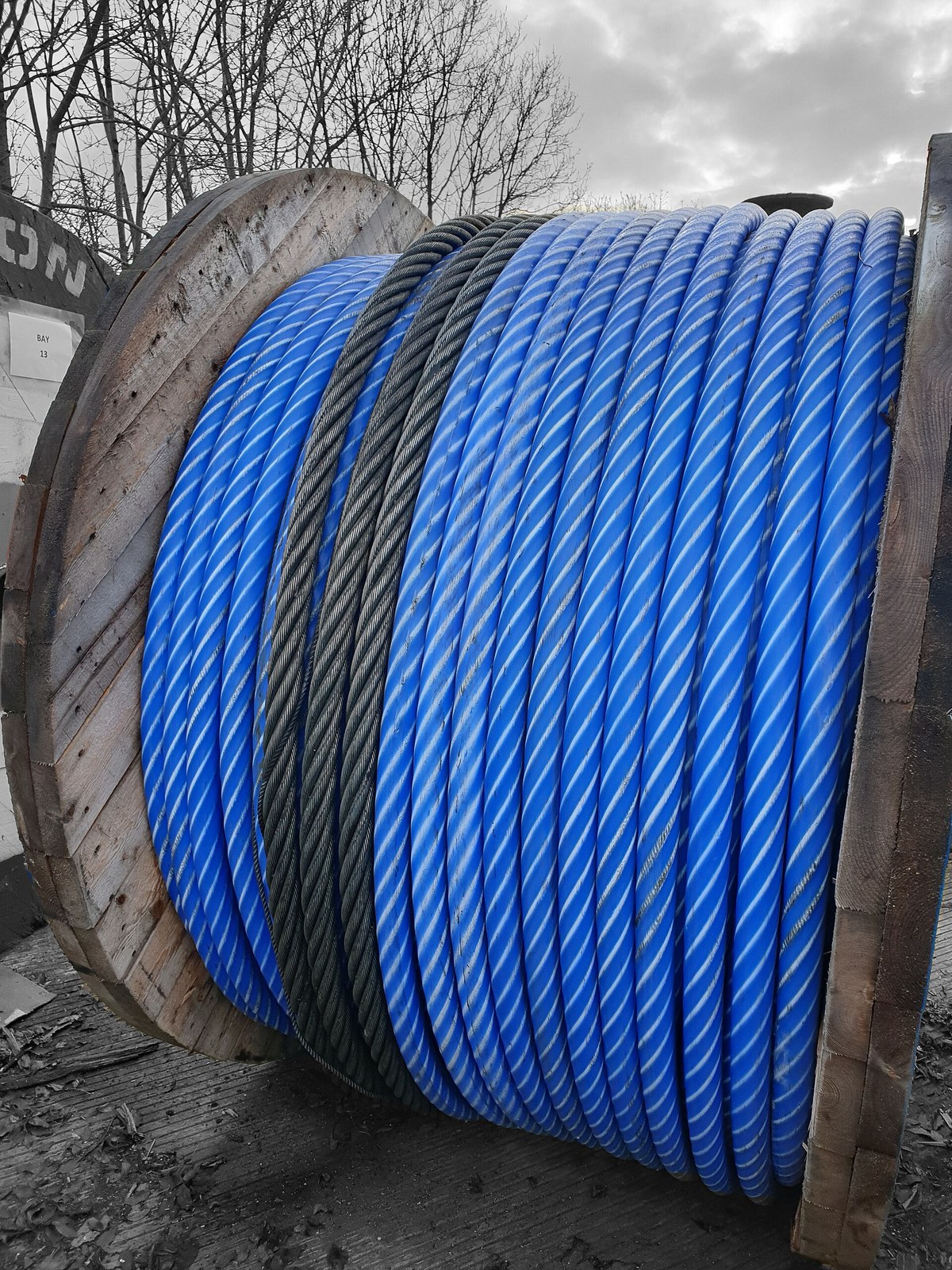
Consider a crawler crane operating in a quarry. The hoist rope has been running over a sheave that was slightly misaligned since a rebuild. Nobody notices because the rope still holds the load and the crane still makes money. Six months later a strand breaks on the drum, the rope jams, and a 40-tonne load swings. The investigation finds extensive corrosion, dozens of broken wires concentrated at the drum, and a diameter reduction of 7% — a rope that should have been replaced at the three-month inspection.
The financial damage is easy to quantify: the crane is down, the repair is a full rope change, the investigation consumes engineering hours, and the insurance premium moves. The reputational damage is harder to price, but far more expensive.
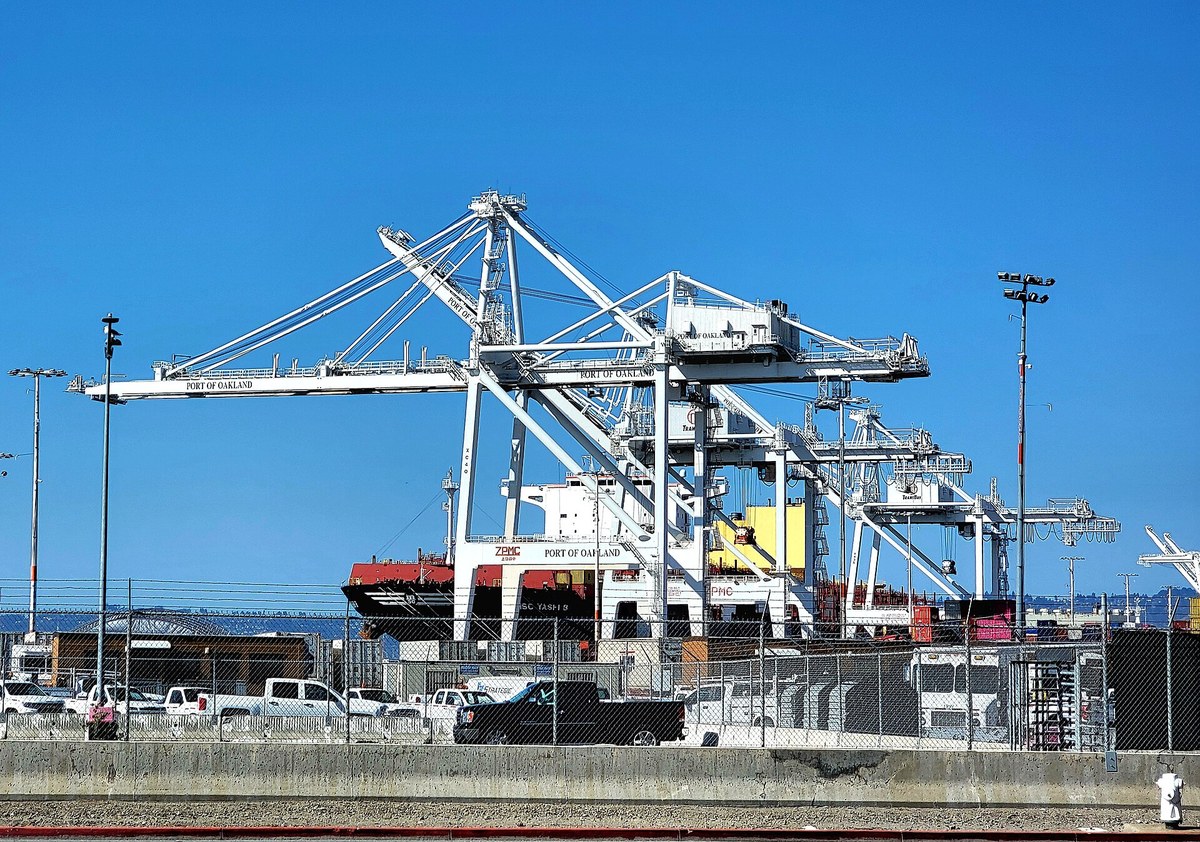
Condition-based and calendar-based inspection are not alternatives — ropes need both. A rope can deteriorate quickly after installation while the machine is bedding in, and a rope can sit idle for years exposed to UV, weather, and corrosion without being used. The best programmes use calendar intervals as the minimum and measured condition as the trigger.
Before you can inspect a wire rope correctly, you need to know what the rope is made of. Terminology is precise in this industry, and mislabelling a construction can lead to the wrong retirement threshold being applied.

The single most important distinction is the core:
Common constructions:

Wire grade governs strength and wear resistance. EIPS (Extra Improved Plow Steel) is the standard high-strength grade; 1770 MPa, 1960 MPa and 2160 MPa denote the tensile strength of the wire.
Confirming the exact specification on the rope's tag or certificate before applying thresholds is not optional — a 7% diameter reduction limit applies to bright rope, while galvanised and stainless variants may have different limits set by the manufacturer.
The frequency of inspection is determined by the severity of duty, not by convenience. The following framework reflects common industrial practice and should be adapted to the manufacturer's instructions and local regulations.
A short visual check by the operator before the rope is put into service:
This takes seconds and prevents the most common category of lifting incident.
| Condition of Service | Inspection Frequency | Level of Examination |
|---|---|---|
| Normal, infrequent use | Every 6 months | Full visual examination, all working lengths |
| Heavy or continuous duty | Every 3 months | Full visual examination with measurements |
| Severe duty, abrasive, corrosive, or offshore | Monthly | Full visual examination, measurements, and record review |
| After any exceptional event | Immediately | Full examination including non-destructive testing where warranted |
Following a shock load, an overload, a rope derailment, a drum or sheave failure, or a near-miss, the rope must be removed from service and examined completely. It should not simply be returned to duty on the basis of a quick look.
This is the backbone of any inspection routine. The rope should be examined over its entire working length, and the examination must be methodical enough that a different inspector will reach the same conclusion.
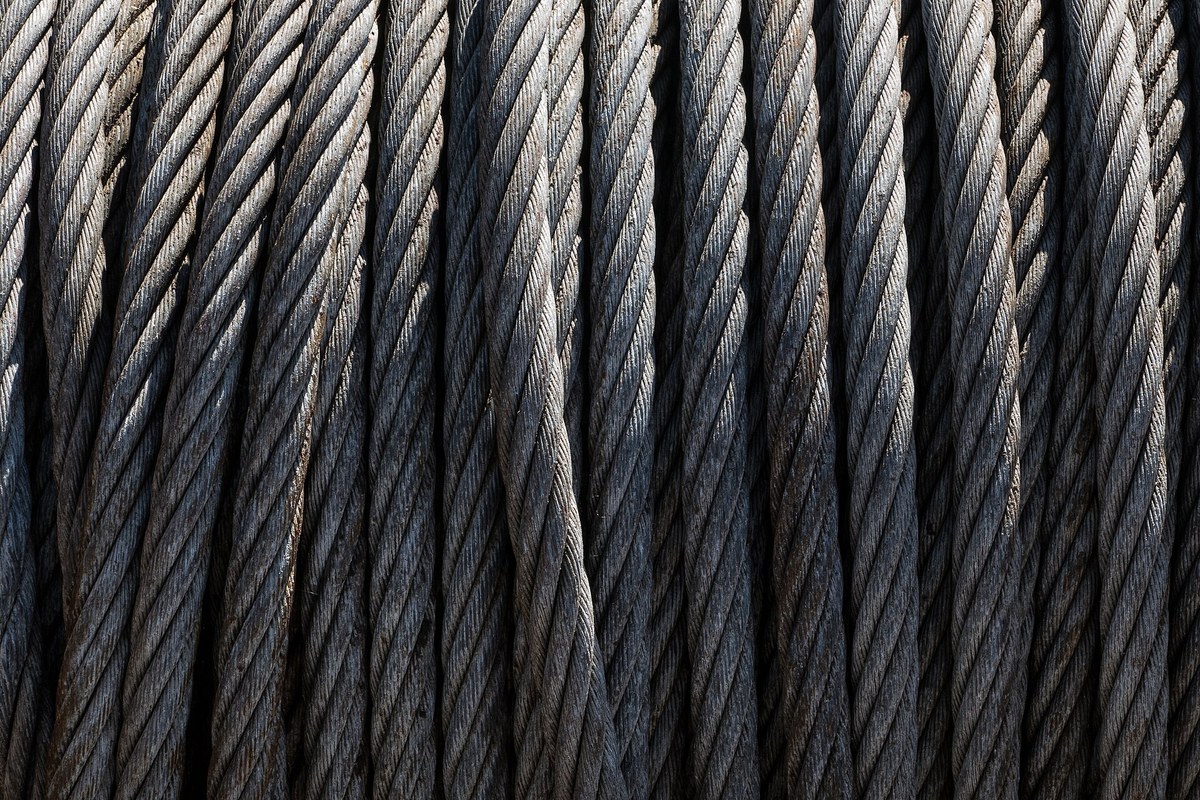
Measurement converts a subjective judgement into a documented number. Take the diameter with a vernier caliper or a dedicated go/no-go gauge, at least 5 wire diameters from any termination to avoid measuring the transition zone.
Where the duty is critical or the consequences of failure are severe, supplementary testing adds confidence:
A rope must be withdrawn from service immediately if any of the following conditions are present. This is not a judgement call.
Retirement thresholds are specified in terms of broken wires in a given rope lay length, and the acceptable count depends on the construction and the number of wires in the outer strands.
A practical working rule used across much of the industry is that more than 10% of the wires in a single strand, or more than 5% of the total wires in a 6d (six diameters) length, broken in the same plane, requires removal from service. Smaller constructions tolerate proportionally fewer broken wires because each wire carries a greater share of the load.
Any significant surface rust on the wires should be assessed. Surface corrosion removable by light wire brushing, leaving a smooth surface, is generally acceptable if it does not recur quickly. Pitting corrosion, deep rust, or rust that returns rapidly after cleaning indicates the wire has been materially weakened, and the rope must be retired.
For galvanised rope, the loss of the zinc coating is the governing concern. A rope where the coating is visibly consumed and rust is developing underneath has lost both its corrosion protection and some of its wire diameter.
Exceeding the permitted reduction — typically 7% for bright rope — means the rope has lost too much effective cross-section to continue in service.
Bent strands, flattened sections, kinks, wave deformation, and core protrusion are all absolute retirement conditions. A rope that has been kinked has suffered internal wire damage that cannot be assessed by surface examination alone.
Cracked, corroded, distorted, or worn sockets, wedges, thimbles, and clips must be replaced. Where a termination has been subjected to a shock load, the entire assembly must be replaced regardless of appearance.
Reviewing failed ropes returned to our factory for analysis reveals a remarkably consistent set of causes.
The single most common cause of early wire rope failure. A misaligned sheave, or one running in a groove worn below its rated diameter, concentrates the entire rope tension onto a narrow band of wires, producing rapid abrasive wear and the characteristic "bright scarf" pattern on the rope surface. The remedy is not a stronger rope but correct sheave alignment, correct groove angle (typically 45°), and sheave replacement at the manufacturer's wear limit.
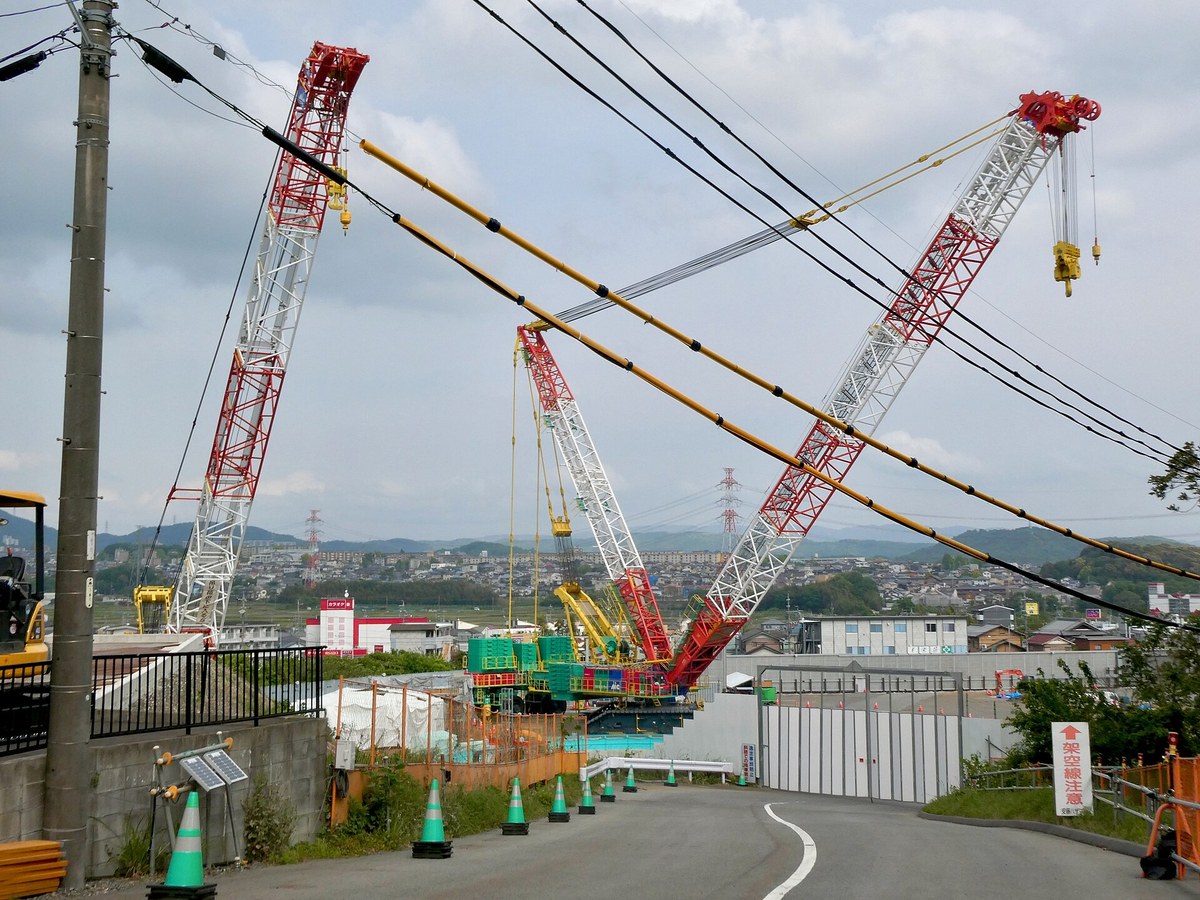
Develop a written inspection procedure with defined acceptance and rejection criteria, and use the same criteria every time. The largest source of inconsistency is an inspector who judges "looks a bit worse" without a measurement to anchor the decision.
A complete inspection history is what allows you to identify a deteriorating trend. Recording the date, rope identification, working length inspected, number of broken wires, diameter readings, and the inspector's name turns each inspection into data that supports replacement planning.
Anyone performing rope inspections should be trained and competent in the relevant standards and in rope-specific knowledge — rope construction, the discard criteria, the use of measuring instruments, and the distinction between a rope that may continue in service and a rope that must be withdrawn.
The rope's certificate and the manufacturer's technical data are the authoritative source for the retirement criteria that apply to that specific construction, grade, and surface condition. When a rope is supplied by Aulone, that documentation travels with the rope, and our technical team is available to support any inspection or failure analysis question.
Ropes stored improperly before installation often fail soon after entering service.
Individual inspections answer the question "is this rope safe today?". A rope management programme answers a more valuable one: "what should I buy, and when?".
For a fleet of cranes, hoists, or winches, a structured approach delivers measurable savings:
At Aulone we support this process with documentation that travels with every order: material test certificates, verified breaking load figures, construction and grade confirmation, lay direction, surface condition, and length.
Wire rope fails gradually, and gradual failure is entirely manageable — but only if someone is looking for it. The difference between a rope that lasts three years and one that fails in six months is rarely the rope itself. It is the quality of the sheave alignment, the quality of the lubrication, the discipline of the inspection routine, and the willingness to remove a rope from service when the evidence says to.
The most expensive wire rope in the world is the one that failed. The most valuable is the one that was replaced a week before it would have.
If you are specifying wire rope, reviewing a supplier's documentation, or investigating a rope failure, Aulone's technical team is ready to help.
About Aulone: Changsha Aulone Construction Machinery Co., Ltd. manufactures steel wire rope, wire rope slings, end fittings, locked coil ropes, spiral strand cables, and piling and drilling tools, supplying crane, mining, port, marine, offshore, elevator, and general industry customers worldwide from our factory in Liuyang, Hunan.
Some photographs in this article are sourced from Wikimedia Commons and are used under CC0, public domain or CC BY-SA licences. Copyright remains with the respective authors. Attribution details are listed below.
For detailed specifications and in-house product photography of Aulone wire rope, please contact our technical team.
Contact: AULONE
Phone: 86-15573139663
Tel: 86-0731-83165008
Email: info@aulone.com
Add: Address:Kaiyuan road 36,Chunkou,Liuyang, Hunan,China.
 AULONE