Language:



Steel wire rope is exceptional at carrying load and remarkably vulnerable to its surroundings. It survives years of cyclic bending, abrasion, shock loading and heat in conditions that would destroy most engineering materials — while living in the one medium that destroys them all: water carrying dissolved salts, acids and industrial contaminants. Of the three mechanisms that retire a rope, corrosion is the most underestimated, because it never announces itself.
The answer is not one product but a family. Three systems dominate: zinc-coated (galvanized) wire rope, stainless steel wire rope, and plastic impregnated rope. Each solves the same problem differently and fails in its own way. The choice is often made by default, not analysis.
At Aulone we manufacture steel wire rope for cranes, hoists, mining equipment, port machinery, offshore installations and general industry. This article explains how each system works, where it performs, where it does not, and how to specify and inspect it.
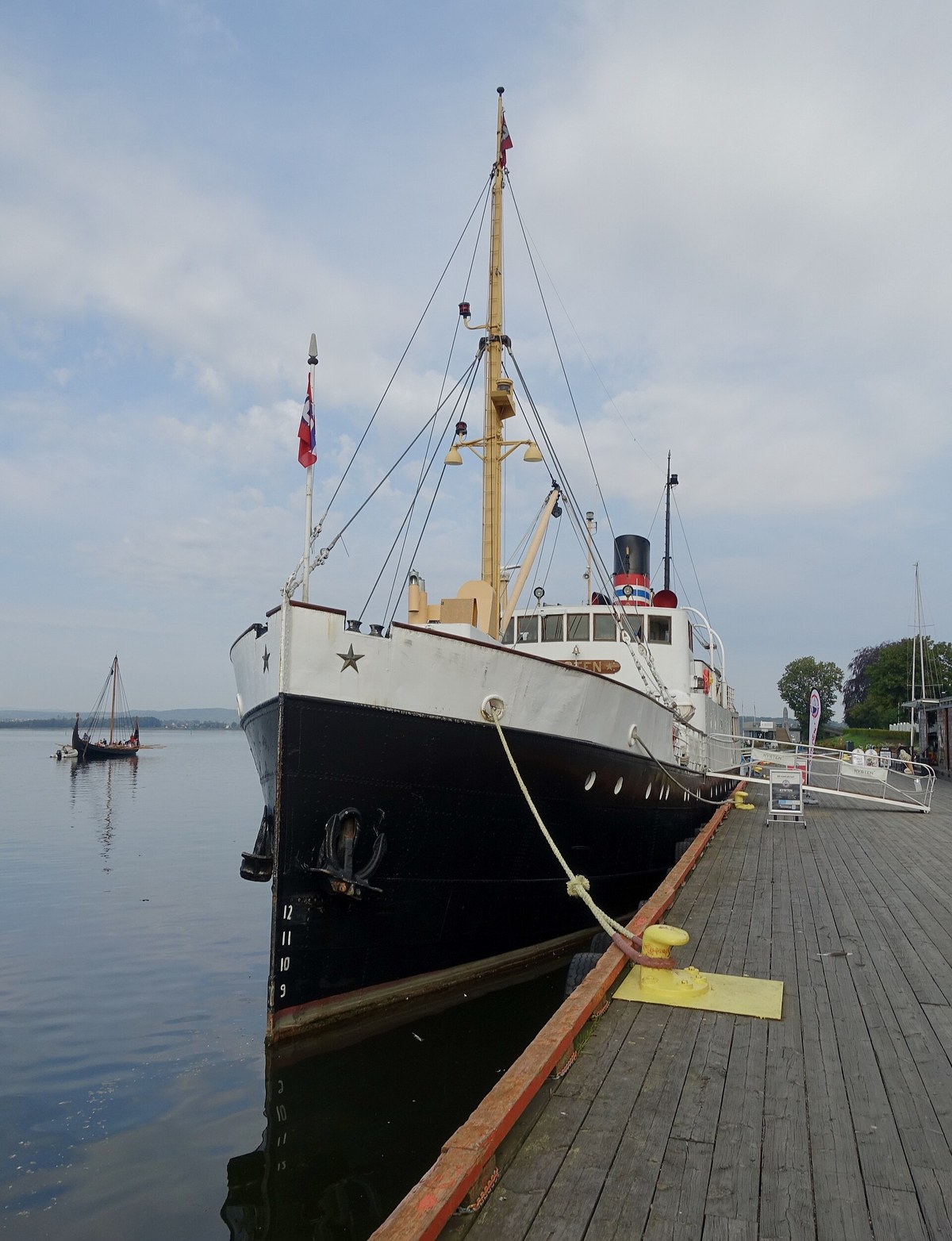
Corrosion attacks a rope three ways.
Cross-section loss. Pitting corrosion, the commonest form in chloride-bearing environments, excavates cavities into the wire surface, so a wire can lose much of its section at one pit while still looking sound.
Fatigue acceleration. A pit is a stress concentrator. Under repeated bending it initiates a fatigue crack, which is why corrosion-damaged ropes fail from fatigue rather than static overload.
Lubrication loss. A contaminated film lets wire-on-wire friction rise, generating heat, wear and breakage.
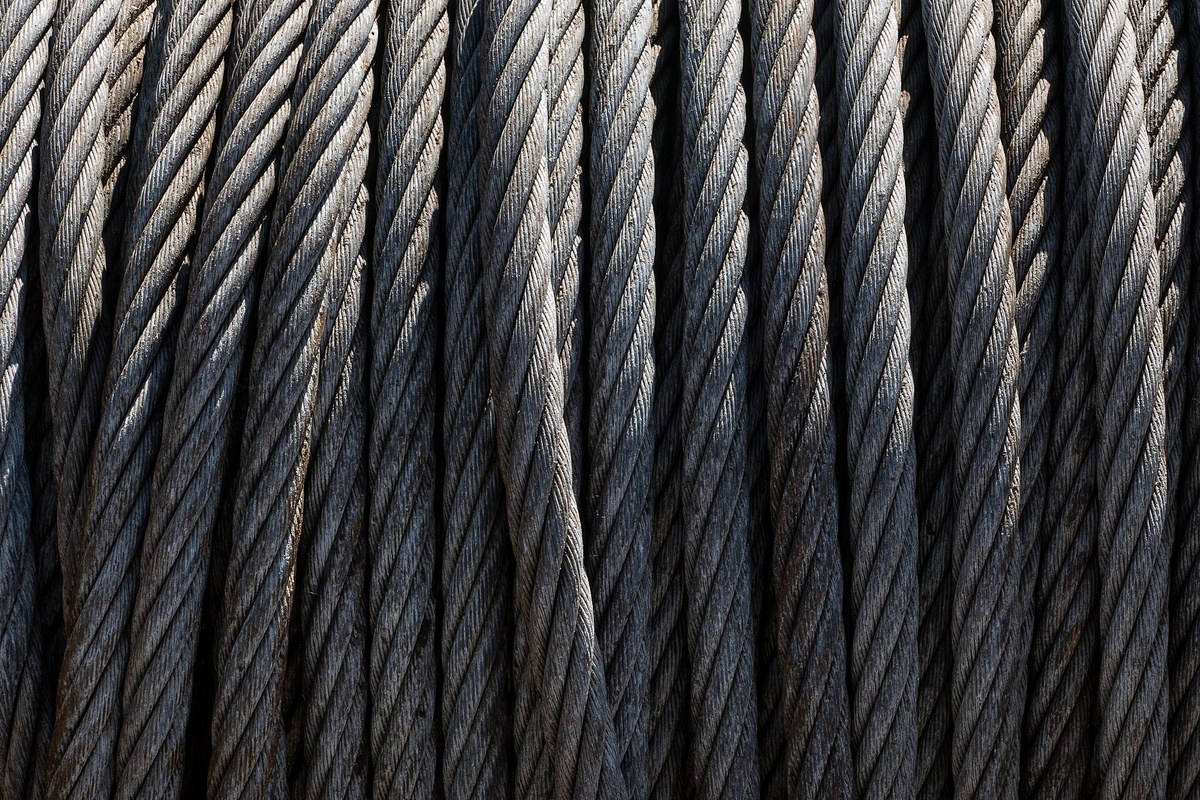
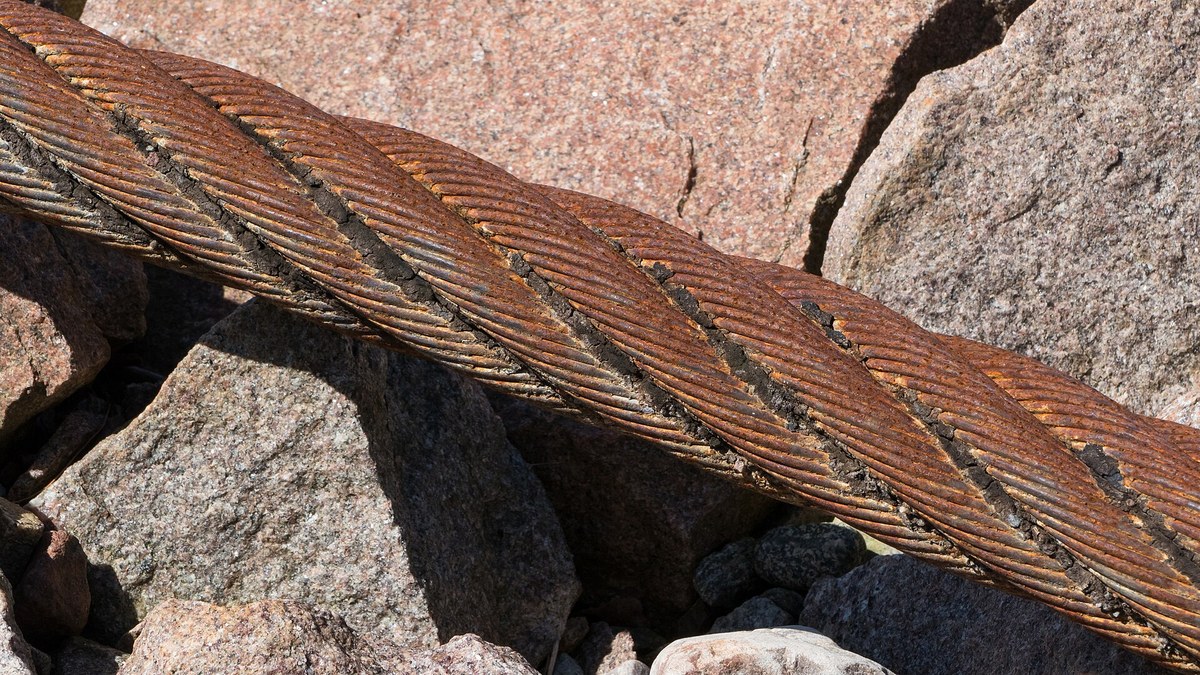
Corrosion therefore cuts both breaking load and fatigue life in ways visual inspection misses.
Three mechanisms are at work: sacrificial action in galvanized rope, passivation in stainless steel, barrier sealing in plastic impregnated rope.
| Surface Treatment | Corrosion Resistance | Typical Applications | Maintenance Notes |
|---|---|---|---|
| Galvanized | Good in fresh air and industry; protects scratches sacrificially; poor in acidic water | Outdoor cranes, general lifting, ports, surface mining | Never oil; never store wet; replace when zinc is gone |
| Stainless (304 / 316 / duplex) | Excellent; 316 and duplex resist chloride pitting; acid resistant | Offshore rigging, chemical plant, food and pharma | No lubricant to renew; watch for pitting; lower strength means larger diameter; highest cost |
| Plastic impregnated (PVC) | Barrier protection excluding water, salts and chemicals; unaffected by chlorides | Food and beverage, pharma, aquaculture, mining mud lines, washdown | Any breach exposes the core: cut back and re-impregnate, or replace |
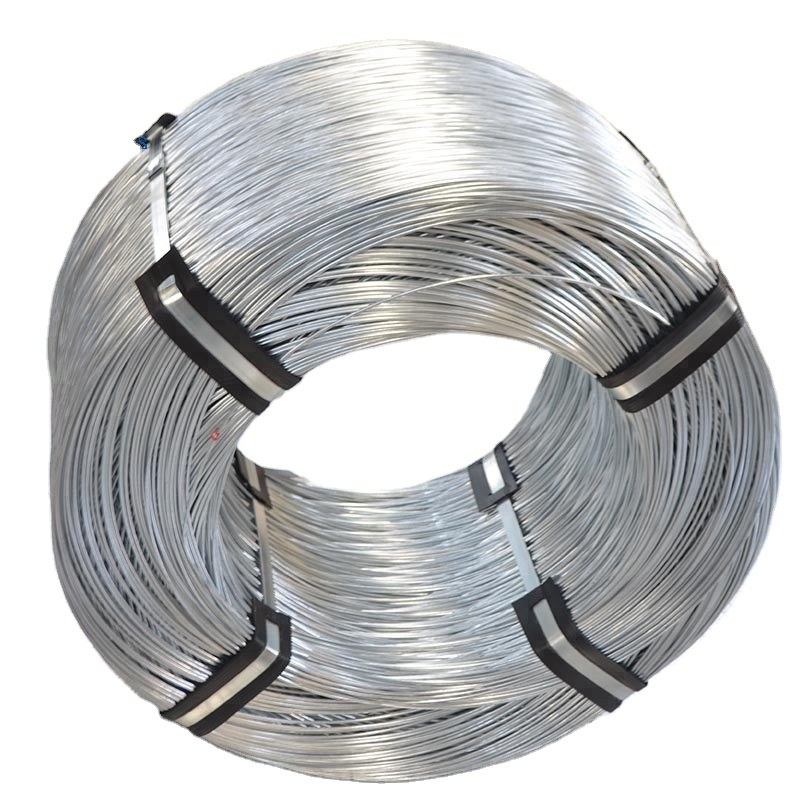
The coating is applied by electrogalvanizing (wire coated in an electrolytic bath before stranding) or hot-dip galvanizing (strand through molten zinc). Both give a metallurgical zinc-iron layer.
Zinc sits well below iron in the galvanic series, so wherever both metals meet the same electrolyte, zinc becomes the anode and dissolves while the steel acts as cathode. The coating corrodes instead of the steel — sacrificial protection, and why galvanized rope lasts.
Zinc does not disappear evenly. It oxidises to zinc oxide, then to zinc hydroxide and basic zinc carbonate, forming the pale grey powdery deposit known as white rust — the signature of a coating still working. Only when zinc is exhausted does the steel corrode, producing red rust.
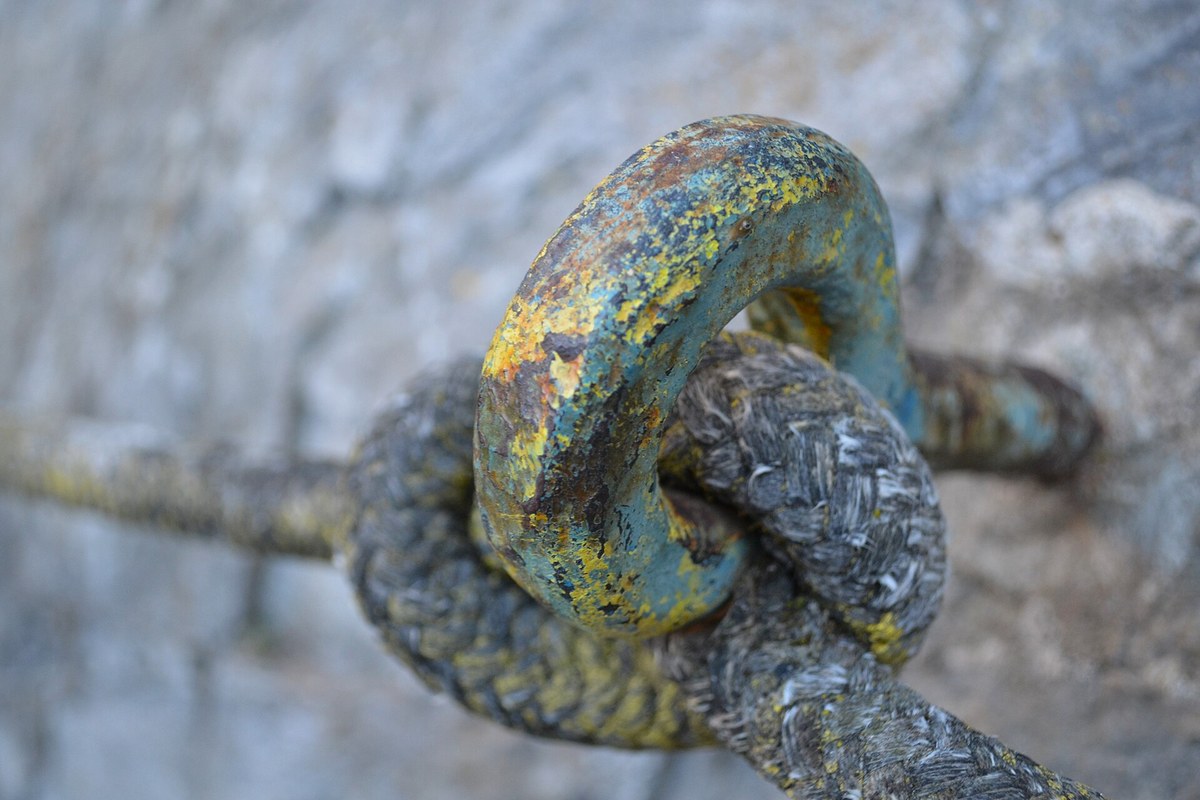
Galvanized wire rope must not be oiled. This is a functional requirement, not a preference. Oil traps moisture against the zinc layer, blocking the electrolyte the sacrificial reaction depends on, and holds water, salt and dirt against the coating. The result is faster zinc loss, hidden white rust and early exhaustion.
Mechanical damage is inevitable, and its consequence depends on the damaged area relative to the surrounding zinc. A scratch exposing a small fraction of the steel creates a small anode on a large zinc cathode, so the galvanic couple consumes surrounding zinc preferentially: the damaged zone spreads and the coating delaminates. Large exposed areas differ — once the area is significant against available zinc, protection can be lost within a fraction of rated life. Treat any breach exposing bright steel as an inspection event.
Galvanized rope is the default for outdoor and general lifting — economical, in all standard constructions, suiting port handling, site cranes and surface mining. Its limits are clear: acidic mine water, immersion and chloride exposure.
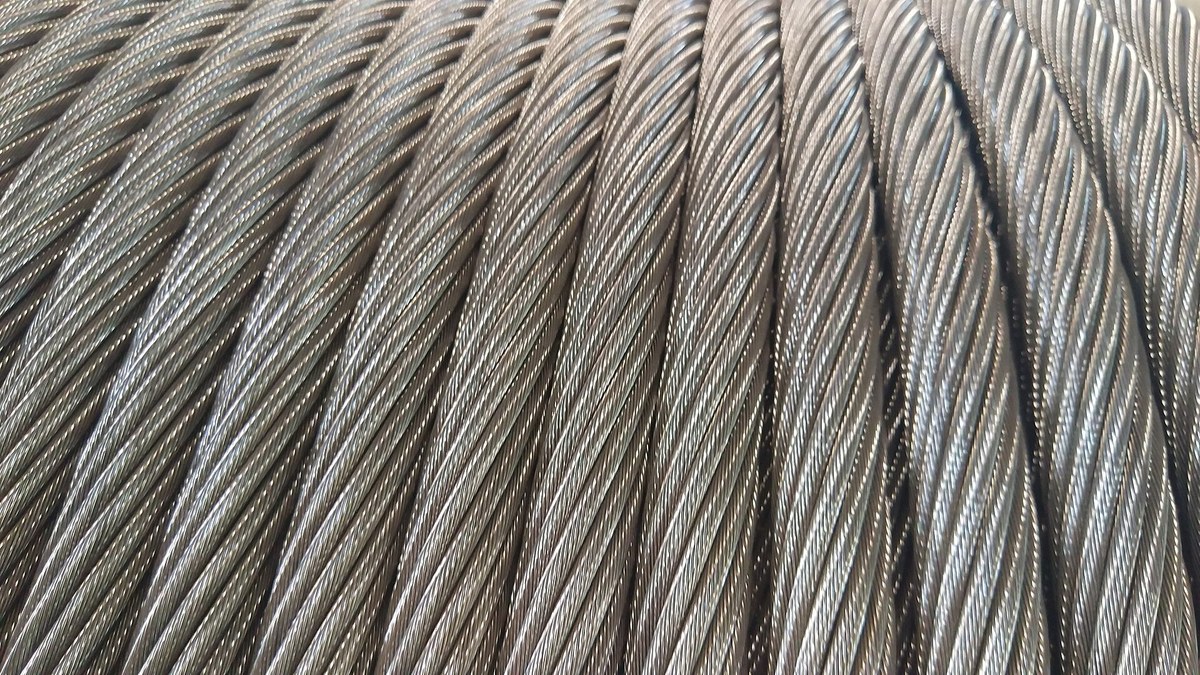
Stainless wire is generally 10–20% lower in tensile strength than bright high-strength steel wire of the same diameter, and its modulus of elasticity is slightly lower, so a stainless rope stretches more under the same load. The consequence is a size penalty: a larger diameter or higher-grade wire is needed for the same load. Specify it only where corrosion would end rope life.
Stainless does not rust but is not immune. It can suffer pitting corrosion in chloride-rich water, crevice corrosion where the passive film cannot repair itself, stress corrosion cracking in hot chlorides, and tea staining on 304. Austenitic grades are non-magnetic, so flux leakage inspection does not apply to 304 or 316 rope; use ultrasonic or eddy current.
It earns its cost in chloride-rich or aggressive service, or where failure would be severe — offshore platform handling, marine cargo work, chemical plant, food and pharma.
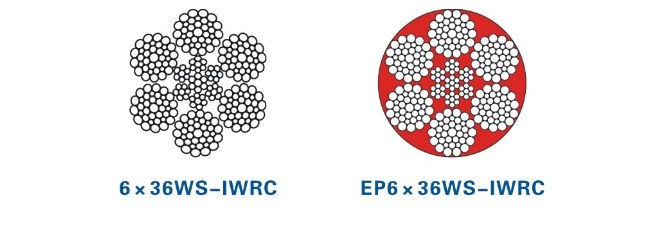
Plastic impregnated rope is not simply a coated rope. The construction — PVC or polyurethane applied to individual wires before stranding, or forced into the finished strand under pressure — fills the interstices and seals the strand against water, salts, chemicals and dirt. Protection is by exclusion, not chemistry.
The difference is clear in cross-section: an EP rope fills the interstices between strands and around the core with polymer, becoming a solid composite rather than a lattice.
Use the environment as the primary selector, then let strength and cost refine the choice. ISO 12944-2:2018 grades atmospheric corrosivity from C1 (very low) to CX (extreme). The 2018 revision merged the older C5-I and C5-M sub-categories into one C5 and added CX, so an old "C5-M" specification describes a coastal site now called C5 or CX.
| Operating Environment | Corrosivity | Recommended Treatment | Design Note |
|---|---|---|---|
| Dry indoor plant | C1 – C2 | Bright (oiled) rope | Lubrication is the primary control; keep humidity low |
| Indoor, condensation or washdown | C2 – C3 | Galvanized, or plastic impregnated | Ensure drainage; no standing water in pockets |
| Outdoor, rural or inland | C3 | Galvanized | Renew at the first sign of white rust |
| Outdoor, urban or polluted industrial | C4 | Heavier coating mass; stainless for critical duty | Sulfur compounds accelerate zinc loss |
| Coastal, onshore | C4 – C5 | Stainless 316, or heavier galvanized | Wetting and drying cycles drive the rate |
| Offshore, splash and tidal | C5 / CX | Stainless 316 or duplex; impregnated for low-demand rope | Galvanized unsuitable in continuous splash |
| Mining, underground | Acidic water, high abrasion | Stainless or polymer-impregnated by abrasion level | Zinc dissolves rapidly in acid |
| Chemical plant and process | Variable, often CX | Stainless 316L or duplex matched to the chemical | Match alloy to chemical and temperature |
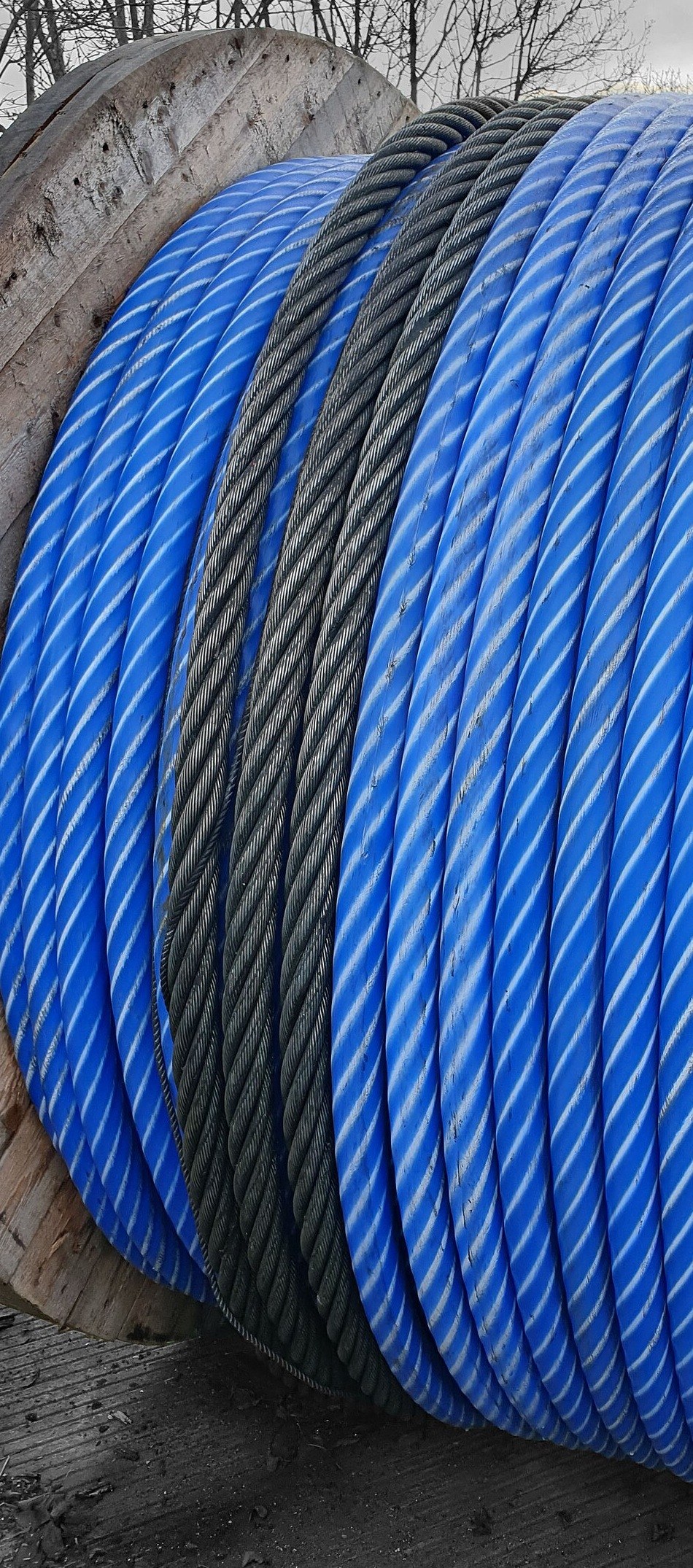
If chlorides are present and the rope will be wet, galvanized rope is a stopgap, not a solution. Where contamination is unacceptable — food, pharma, potable water — impregnation removes it.
Minimum zinc coating mass is the objective, verifiable parameter for galvanized rope, and it should appear on the purchase order and the certificate. ASTM A641/A641M grades zinc-coated steel wire by coating mass in ounces per square foot of uncoated wire surface, the minimum set by wire diameter: Class 1 (light, 0.15–0.53 oz/ft²), Class A (0.45–1.20 oz/ft²), Class B (0.90–2.00 oz/ft²) and Class C (1.35–3.00 oz/ft²). Earlier editions labelled the same three heavy classes 3, 4 and 5, so an old certificate reading "Class 4" is a Class B wire. For wire of 0.192 in (about 4.9 mm) diameter and larger the minima are 1.20, 2.00 and 3.00 oz/ft² for Classes A, B and C; one ounce per square foot is 305 g/m². EN 10244-2 does the same for Europe, from 30 to 300 g/m².
Stainless is specified by grade (304, 316, 2205, 2507) and surface condition; impregnated rope by polymer type and impregnant mass. An under-impregnated rope looks identical to a treated one until it fails in service.
EN 12385-4, Steel wire ropes — Safety — Part 4: Stranded ropes for general lifting applications, is the European standard for general lifting rope. It requires wire quality to conform to EN 10264-2, permits rope grades of 1770, 1960 and 2160 N/mm² up to 60 mm diameter, requires lubricants to comply with ISO 4346, and gives minimum breaking forces in tables 5 to 17. It sets the baseline corrosion protection must match.
API Spec 9A covers wire rope for oil and gas drilling, well servicing and hoisting, including mooring and anchor lines. It governs the metallurgy and testing a rope needs to survive a sour, chloride-laden offshore environment — the right offshore baseline.
For in-service inspection, ISO 4309 sets the discard criteria, counting broken wires over defined lengths of rope and limiting corrosion-damaged rope. Where surface condition is degraded, its visual criteria are supplemented by flux leakage.
Corrosion is evidence of lost section, not a defect to clean away.
Never repair corrosion by coating over it, and never assume the rope is sound because visible rust appears only on the outer wires.
Corrosion protection does not remove the need for routine care. It changes what the care must achieve: on galvanized rope, catch the white-rust-to-red-rust transition early; on stainless, detect pitting before it becomes a fatigue crack; on impregnated rope, find the breach.
| Duty and Environment | Visual Check | Detailed / NDT Examination | Full Examination |
|---|---|---|---|
| Continuous duty in severe marine, offshore or chemical service | Each shift or weekly | Quarterly | Annually |
| Normal lifting duty, outdoor or exposed | Weekly | Monthly | Annually, and after overload |
| Indoor, moderate duty, clean environment | Monthly | Quarterly | Annually |
| Stored or out of service | Before installation | Before installation | On return to service after 6 months in storage |
Keep the rope clean, because salt, mud and abrasive dust held against the surface are the raw material of corrosion. Store it ventilated and off the ground. Never coat corrosion over, since cleaning reveals condition and paint hides it. Record the environment with the inspection history, then replace on schedule.
Corrosion protection is not a single decision between good and bad. It is a choice between three failure mechanisms: a sacrificial zinc layer that must be kept dry, a passive film that costs cross-section and defeats flux leakage, or a polymer barrier that must be cut back. None is better; each fails its own way.
Specify the environment first, then the system that matches it, then the size and construction the load requires. Verify coating mass or grade on the certificate, not the label, and treat any break in the protection as scheduled work.
Changsha Aulone Construction Machinery Co., Ltd. manufactures steel wire rope, wire rope slings, end fittings, locked coil ropes, spiral strand cables and piling tools, supplying crane, mining, port, marine, offshore and general industry customers worldwide from Liuyang, Hunan. Every order carries material certificates and technical review.
External images are hosted on Wikimedia Commons under CC0, public domain or CC BY-SA licences, used with attribution as required. Own-product images are Aulone's.
| Image | Source | Licence |
|---|---|---|
| Mooring rope at a harbour quay | Wolfmann, Wikimedia Commons | CC BY-SA 4.0 |
| Steel wire rope on a winch drum | W.carter, Wikimedia Commons | CC0 |
| Corroded wire rope on a rocky shore | W.carter, Wikimedia Commons | CC0 |
| Zinc corrosion products on coated rope | Jkivve, Wikimedia Commons | CC0 |
| Stainless wire rope strands, 19×7 | Spring9910, Wikimedia Commons | CC BY-SA 4.0 |
| Impregnated wire rope on a wooden reel | CertexUK, Wikimedia Commons | CC BY-SA 4.0 |
| Aulone bright steel wire rope coil | Aulone (own image) | Aulone 奥隆 |
| Aulone 6x36WS-IWRC vs EP6x36WS-IWRC section | Aulone (own image) | Aulone 奥隆 |
Contact: AULONE
Phone: 86-15573139663
Tel: 86-0731-83165008
Email: info@aulone.com
Add: Address:Kaiyuan road 36,Chunkou,Liuyang, Hunan,China.
 AULONE